
Getting to know Ball State football head coach Mike Uremovich
The second-year coach looks to establish good habits after a year of transition-- and promise.
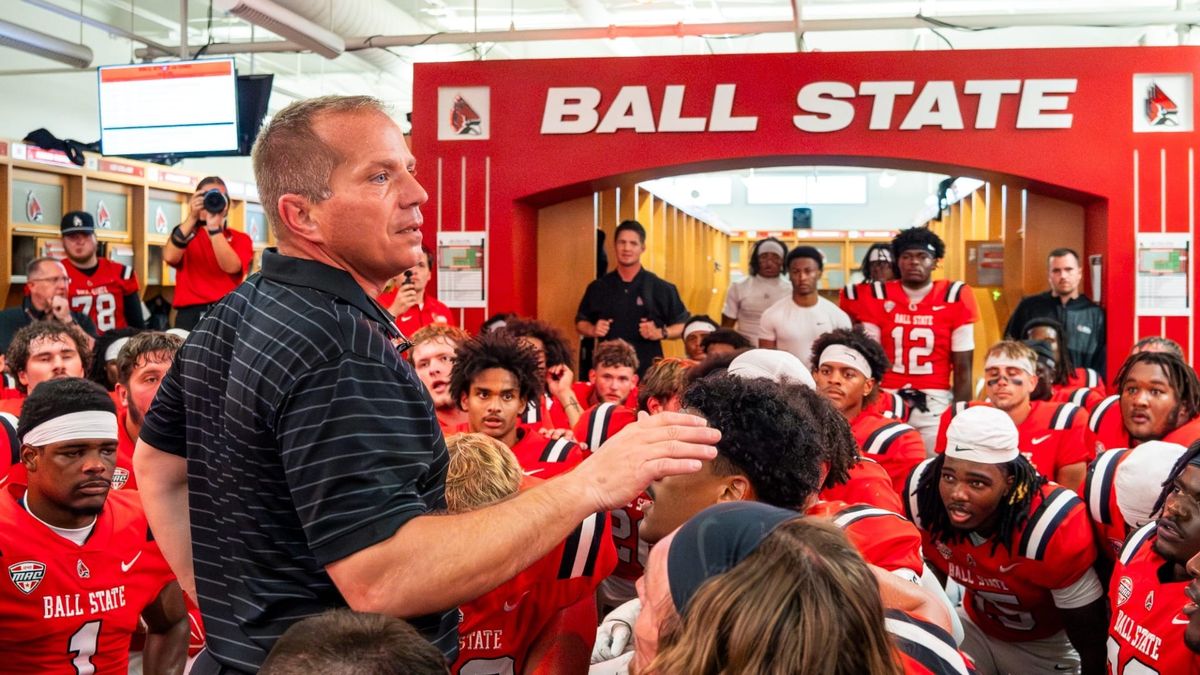
The Ball State Cardinals needed a new direction after departing with former program legend Mike Neu in 2024.
The administration looked at the landscape and opted to stay close to home, hiring Mike Uremovich, a Chicago-area native who had several stints in the Mid-American Conference as an assistant coach, from nearby Butler University.
Uremovich's task was to guide a Ball State team which was talented but needing direction. The Cards finished 4-8 overall in his first season, with a 3-5 MAC mark highlighted by BSU jumping up and biting Ohio's nose in the league opener– a result which eventually impacted the overall title race.
Now with a baseline to build upon, Uremovich seeks to guide his unit to the next step up. We sat down and talked with Uremovich via phone on May 20th, and what follows is a transcript of the full interview, lightly edited for clarity.
By The Belt: Now that you've been in Muncie for about a year plus, how have you settled in so far?
Mike Uremovich: Good, really good. My family really likes it here. The community's been great. Our coaching staff is It's all settled in now and we have all of our coaches back from last year, which is great. We didn't lose anybody, which is a challenge in college football these days. So I feel like the program's settled in and set up and have everything ready to go for year two.
Now you arrived at Ball State from Butler, an FCS program that plays in the non-scholarship Pioneer League. How difficult was it to navigate recruiting in that scenario?
It really wasn't difficult. Football is football and recruiting is recruiting and I've coached at every level. I've coached high school football all the way up to at NC State in the ACC and the MAC multiple times [with Northern Illinois], was at Temple. So I think recruiting is recruiting.
Obviously it's different when you have scholarships or don't have scholarships in terms of financially what you can do for the student-athletes. But at the end of the day, you're trying to show those kids that they can get a good education at Ball State. You're trying to show them the opportunities they have football-wise at Ball State, and you're trying to sell them on the experience they're going to have being in the program.
So it's really all the same to me, whether you're recruiting Division III or recruiting in the ACC. It's about building relationships with the kid and their parents and showing them that you have a plan for them. And it's about more than just football.
I know that you graduated from Purdue. How familiar were you with Ball State before your arrival?
I was familiar with Ball State for having coached at Northern Illinois three different times, obviously sharing the same conference with them. And I had coached several games here in Muncie. So I was familiar with the community and the facilities and also some of the great teams they've had in the past. So that was one of the things that really excited me about the opportunity was to be able to come back to Ball State where they played really good football in the past and the community support's been really good. And knowing that the MAC conference is super competitive, that really got me excited when the opportunity came available about a year and a half ago.
Nice that you're familiar with them through coaching against them and now seeing the facilities in person. What about growing up?
Growing up as a kid, I was a Notre Dame football fan and my brother was a Michigan fan. And whenever they played, we'd spend most of the game fighting each other instead of watching the game. But I went to Providence Catholic High School. I was a south side of Chicago, way south side of Chicago, Catholic kid. So I was a Notre Dame fan.
How would you describe what you and your staff run on offense and defense? What is your team's overall philosophy?
Well, our philosophy is to be the most physical team on the field, to be the most disciplined team in the country, and to put our players in a position to make plays. And that changes from year to year.
You can't just say this is my offense and this is my defense. I mean, obviously we have schemes and structures that we like, but you really have to build it to the roster that you have. And in last year's case, it was what we inherited. And in this year's case, we've had a little better opportunity to recruit to the systems that we'd prefer to run.
But at the end of the day, you have to get your best players on the field and you have to give them the ability to know what they're doing and play fast. And so that's stuff that we've continued to preach and stuff that we work on every day. And I thought we did a much better job of that this spring. As a program, our guys knowing their assignments, attacking their assignments, and playing the whole play, which is the standard of what we're asking them to do.
On that note, you've just gone through spring camps, like you said. Where do you think the teams' strengths currently lay, and where do you think they need a little bit of work?
Right now I'd say the strength of our team is going into year two through the development of our young guys through our strength conditioning program and then the guys we've been able to add this portal cycle in January. We're a much deeper football team. We have depth in every position that I feel good about, and we have guys that can contribute way more guys that can contribute, offensively, defensively, and on special teams as well. So just the depth piece is an important thing in football obviously, as injuries are a real life thing. And with how competitive the MAC is, along with our challenging non-conference schedule, we need that depth to be able to go through the 12 game season.
What was the message that you and your staff sent to your players as you started to ramp up into, out of the spring camps and going into fall camps.
They come back in eight days [as of recording], which I can't wait for. I hate the time of year when they're gone. It's good for them to get away and they need to go home and get away from school and football for a while. But as a coach, I want to be around the players as much as I possibly can. When they come back here, it's the same. We don't have slogans year to year.
We don't have mottos or anything of that. It's just to improve every single day and do the best you can do every single day in everything that you do, whether it's football at the classroom or being out in the community. So I mean, the games that you're trying to win in September, October, November... those games are won by what you do in June, July, and August. So it really is an approach to daily improve as a program. And they need to improve individually as players as well to get our team where we want to go next fall.
I'm really interested in what you had to say about the lack of like, slogans and mottos year over year and focusing on certain aspects of growth instead.... What's your feeling behind that?
I just think that you're committed to winning, and you're committed to getting better and you're committed to what you're trying to establish of identity as a program on a daily basis. I don't know that on fourth-and-two in the fourth quarter of a game that a slogan is going to help you play any better on offense or defense. I think that knowing that the guy to the left and the right of you is just as committed as you are, put in the same work you have and you want to play well, not just for yourself, but for the guys on the team.
That's going to lead you, it's been my experience, it's going to lead you to more success than a different t-shirt every year with a different slogan on it. It's really about us all fighting to go win games together as a group, and that's a daily process.
You were the first of your family to graduate college after you walked on over at Purdue. How did that experience shape you to the person you are today, and how does it help you relate to your team?
Let's be real accurate: I tried to walk on at Purdue and got cut. (Laughs)
So my college career was about 37 minutes, I think, was the tryout before they told me I couldn't play. So I tried to walk on at Purdue, but that experience is probably the best thing that ever happened to me because I didn't make the team and was able to get into coaching high school while I was in college.
I worked for a great high school head coach who ran a really good program and he taught me what it was to be a coach. Honestly, my whole goal of that whole process was to be a high school head coach. My dream when I went into college was to get a degree in history and go back to my old high school and take over from my high school head coach whenever he retired. I did go back there and work for Coach Steffner for two years, and then was given an opportunity to coach Division III football. And then I've been coaching, college football for 24... 25 years now.
But the experience of coaching high school football was a great one. And I really believe starting off in Division III and then coaching NAIA football really helped shape who I am as a coach and taught me how to work and taught me to find solutions to problems. Because I don't care where you're at at every level, there's issues that that you're trying to address as a program, but the Division III/NAIA level, there's a lot of challenges there. You're doing a lot of jobs when you're coaching D-III/NAIA. You're coaching and then you're washing the jerseys and you're painting the practice field and you're handing out the equipment and all of those, having to do all of those things I think has made me a better head coach because I can appreciate the jobs that everybody in our program has to do just to get our team on the field on Saturday.
I think you were starting to get into a little bit in the midst of that question, but it hits on something I was going to ask. Who would you say most directly inspired you to pursue coaching football as your career path?
I would say... both of my parents were extremely hardworking people. They taught me from a young age that there's, my dad would say there's no free lunch. You got to go earn whatever, whatever you want to go get in life. And they both encouraged me to get into coaching.
But my high school head coach, Coach Matt Seffner and his offensive coordinator, Coach Ernst, had two huge impacts on me in my life. They had such an impact on me as a high school player that it made me want to get into coaching. I kind of knew from a young age I thought I wanted to do it, but watching them and the way that they coached me and my brother and our program in high school really, really solidified the fact for me that I wanted to be able to do that for other people.
If you like what you're reading so far, click the button below to help support our independent journalism here at By The Belt!
Speaking on those relationships in coaching, the one between you and your defensive coordinator, Jeff Knowles, goes way, way back to grade school. What is it that you value the most about this friendship and how has it developed or changed in your various stops with him as coworkers?
We were really good friends in high school and we both really wanted to get into coaching and he ended up playing college football. And like I said, I coached high school football while I was in college. And then Jeff was actually a border patrol agent with the US Border Patrol in California.
When he had his first son, he decided he wanted to be able to get into coaching and kind of get out of that line of work, and so we worked together. And he's going through the same things I have, man. We worked together at an NAIA school. Then he worked his way up to be able to get to Northern Illinois. And then he worked his way up to be able to be hired at NC State. And like you said, we've coached together all over the place. But professionally, I just value how good of a coach he is. What a great job he does with the defense and what a great job he does building relationships with the kids. Personally, his two boys are like my sons. Our wives are best friends. We've been together forever.
What was one of the first autographs you got as a kid? And what do you remember about that moment?
Walter Payton.
Walter Payton was my favorite player growing up. I still am a Bears fan. And believe it or not, back then I wrote him a letter and sent him a letter. And I got a picture back about eight months later. I forgot I'd even sent the letter. I got a picture back of him running the football and had his autograph on it. And that's still hanging out from my house right now.
What's your favorite Walter Payton memory?
Probably when he broke the rushing record, broke Jim Brown's record. We used to have this old VHS tape that had his old highlights on it that my brother and I have it memorized. I could tell you about every play on the tape and the commentary behind it and just the way he played the game and how physical he was and tenacious he was. And I was very fortunate to be in Chicago and watch him growing up as a kid and just watch the way he played the game.
You ever have a chance to meet him?
I did not. I did go to the Hall of Fame ceremony though when he was inducted to the Hall of Fame. My mom drove me and my cousin out there and we were able to be there and listen to his speech, which was awesome.
What is something you get way too competitive about outside of football?
All coaches are competitive and everything. So I mean, I'm competitive in everything that I do, but... I don't really... I don't play golf.
I was a wrestler. You can't do that anymore. And I'm no good at basketball, so I don't really play that. But if I'm playing any games with my family or at home or anything like that, my family's super competitive, all three of my kids. And my wife is just as competitive as I am. So we had a lot of fun around the house. If there was one thing, I just think that I can smoke a better brisket and better ribs than anybody else in the country. I would compete in that endeavor.
Oh, that's intriguing. I remember talking to Sean Lewis– he's now the head coach at San Diego State– when he first got here to Kent State, I remember bantering with him back and forth about how to make a good brisket and things of that nature.
(Laughs) We got a bunch of guys– young guys– on our staff that think they know what they're doing. And then once I make my brisket or some ribs, they realize they got a long way to go. So it's been fun to educate them on how to cook a good brisket or good ribs.
You know, speaking on that, everybody loves a good BBQ. And sometimes you need a soundtrack to that. What song or band is at the top of your personal playlist and why?
Right now, the band I listen to the most is probably Mumford & Sons. I had an opportunity to see them in concert. They're probably my favorite band. But I also do listen to a lot of Pink Floyd and I like the Grateful Dead.
Which is your favorite album of all time?
Favorite album of all time is probably... That's a tough one. I really like the new Mumford & Sons album. I think it's called Prize Fighter. That's actually, that's at the top of my list. I've been listening to it a lot recently because it just came out, but I like all types of music.

What moment have you had in your coaching career that was the most miserable you've been as a coach on the field?
Every time we've lost. I don't know if I can pick one out. Yeah, I don't know. I mean, every time we lose is really, really tough. And you put everything you possibly can into that seven day span to try to win that game. So I really feel like every loss is a challenge, is a challenge as a coach to figure out what you did wrong and try to fix it, then it's a challenge as a coach to get over it, and then it's a challenge as a coach to get your team to get over it. So I really feel like every time we've lost a game, it's been pretty tough, and I wouldn't put anyone above any other one of them.
Now, I know you're saying not to put any one moment above any other moment, but what has been the happiest moment as a coach for you, whether that's on or off the field?
Yeah, the happiest moment for me, honestly, as a coach, is when you... Believe me, I love winning and there's nothing better than being in the locker room after a win, singing the fight song. And as a coach, you get to experience that win through the eyes of 105 other players and watch their enjoyment, which is the whole reason we all do it is to watch them succeed.
But honestly, my favorite moment as a coach is when I get a call from one of my former players that tells me they're getting married or tells me they just had their first child or they got a promotion or something really good happening in their life. best moments for me is hearing from the guys when they're done and seeing them be successful and seeing them achieve things away from football or getting the call from the guy that says "Coach, I appreciate everything you did for me the time I wanted to quit and you talked me into staying and I ended up graduating" and now he's successful in life and is a good father and a good husband. That's the payday for me as a coach.
What is a time in your personal life you thought was really challenging but You'd feel proud now of the way that you responded to it.
That's a good question. I don't know because everybody has their stories about in life of challenging things and some things are more challenging than others and some people have much more challenging either upbringings or things happen in their life. But I really look at every negative thing or every challenge that comes up as an opportunity to try to learn and grow from it.
And of course I've made mistakes or I've had bad things happen personally, but I just think as soon as you can move on from it, the better off you'll be and try to learn from it. So I really... obviously you don't want bad things to happen, but I think that you're the person you are based on how you respond to things that happen to you. So I think the person that I am today or the person I'm trying to be is a direct result of everything good and bad that's happened to me.
So I don't know if I can single one out just to say that I do believe that everything happens for a reason. I believe in God and I believe that he gives you certain challenges to make you a better person.
On that note, do you have a favorite [Bible] verse?
No, but I have a favorite saying of Saint Francis of Assisi that said, "if you want to go spread the word of the Lord, if necessary: talk." And I talk to my kids about that a lot, that you say a lot more every day by what you do in the example that you said as opposed to what you say. And so I think that if you live your life the right way and try to help people get where they want to go and do things right, that people will know where you are at in your life as opposed to being the person that just talks about it all the time.
All right, one last question and I'll let you go for the day. I know you're busy today.
No, I appreciate it, man.
If there's one thing a person should know about Mike Uremovich, what would you say that is?
That I'm going to be the same person every day.
I come into work with the same excitement as my first day that I ever coached. I try to go home and be as excited as I can be to get home and be a dad as the first day when my daughter was born. And that really my ultimate goal as a coach or as a person is to help other people get where they want to go. And the reason I have that mindset is I had two really good parents and I was very fortunate to be coached by some great people. And I've worked for some very, very good head coaches who all had other people in mind as above their own personal goals or well-being. And I think that you'll get wherever you want to go, professionally or personally, if you just worry about helping other people get where they want to go.
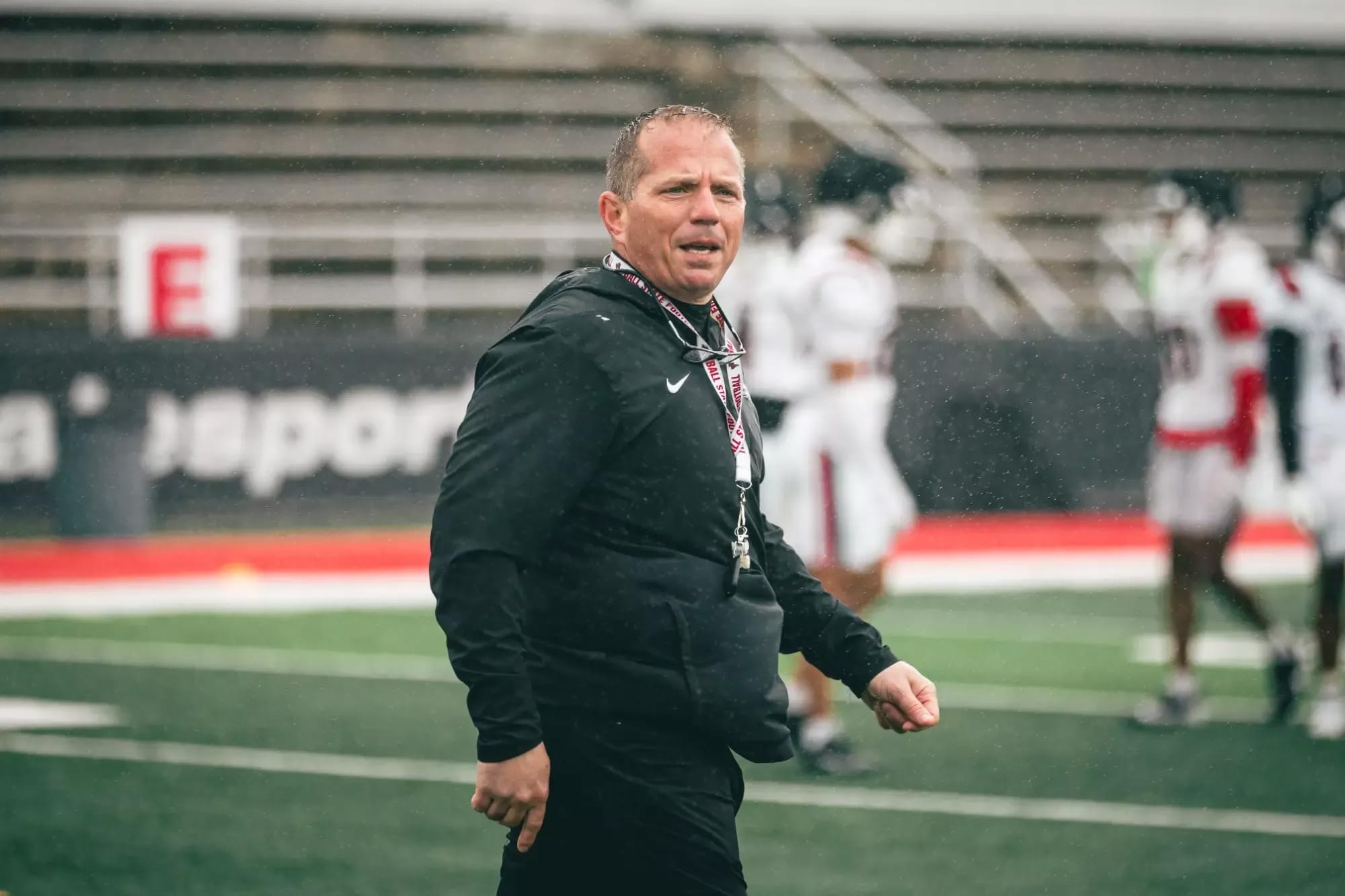
Our thanks go out to Uremovich for taking the time to sit down with us, as well as to Ball State's football communications director Kevin Messenger and Ball State's media department for their assistance with this interview.
The Ball State Cardinals start the 2026 campaign against the Ohio State Buckeyes on Saturday, Sept. 5.
![2026 MAC Football Week 4 Game Preview: Central Michigan Chippewas at Miami [FL] Hurricanes](https://storage.ghost.io/c/74/34/7434ccd7-5d86-4f2c-b98a-0f004224d6d6/content/images/size/w600/2026/09/fit-7.webp)