Cincinnati, Miami (OH) delivered a classic; now the Victory Bell faces an uncertain future
Chuck Martin and Scott Satterfield weigh in on the future of college football's oldest non-conference rivalry.

No non-conference rivalry has been played more often than the Victory Bell series between the Cincinnati Bearcats and Miami RedHawks. And only three FBS conference rivalries — Minnesota-Wisconsin, Auburn-Georgia, and North Carolina-Virginia — have occurred more times.
But the 129th meeting was the most consequential in the rivalry's century-old history.
Cincinnati entered with a slim 61-60-7 series lead, and Saturday featured the final scheduled meeting between the longtime rivals. Either Cincinnati would control the series for the foreseeable future, or Miami (OH) would even things at 61 wins apiece and seize the Victory Bell indefinitely.
Miami looked primed to do the latter.
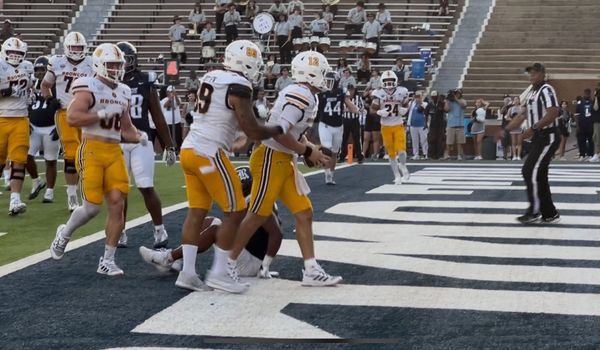
The RedHawks raced to a 28-7 halftime lead in the final scheduled installment of a rivalry that dates back to 1888, but Cincinnati mounted a furious comeback to ensure the Victory Bell would remain in its possession. The Bearcats stormed back to claim a 35-31 victory behind a 53-yard breakaway run from Cole Tabb with 1:29 remaining.
"What a game," Cincinnati head coach Scott Satterfield said. "It's fitting for this. This game has been around for a long time and for us to go out and to win it like this in this venue — I thought it was a great atmosphere there at TQL today. I thought our Cincinnati fans really showed up and were loud, our students, our fans — it was a really cool atmosphere for a college football game."
Cincinnati sealed the all-time series, 62-60-7.
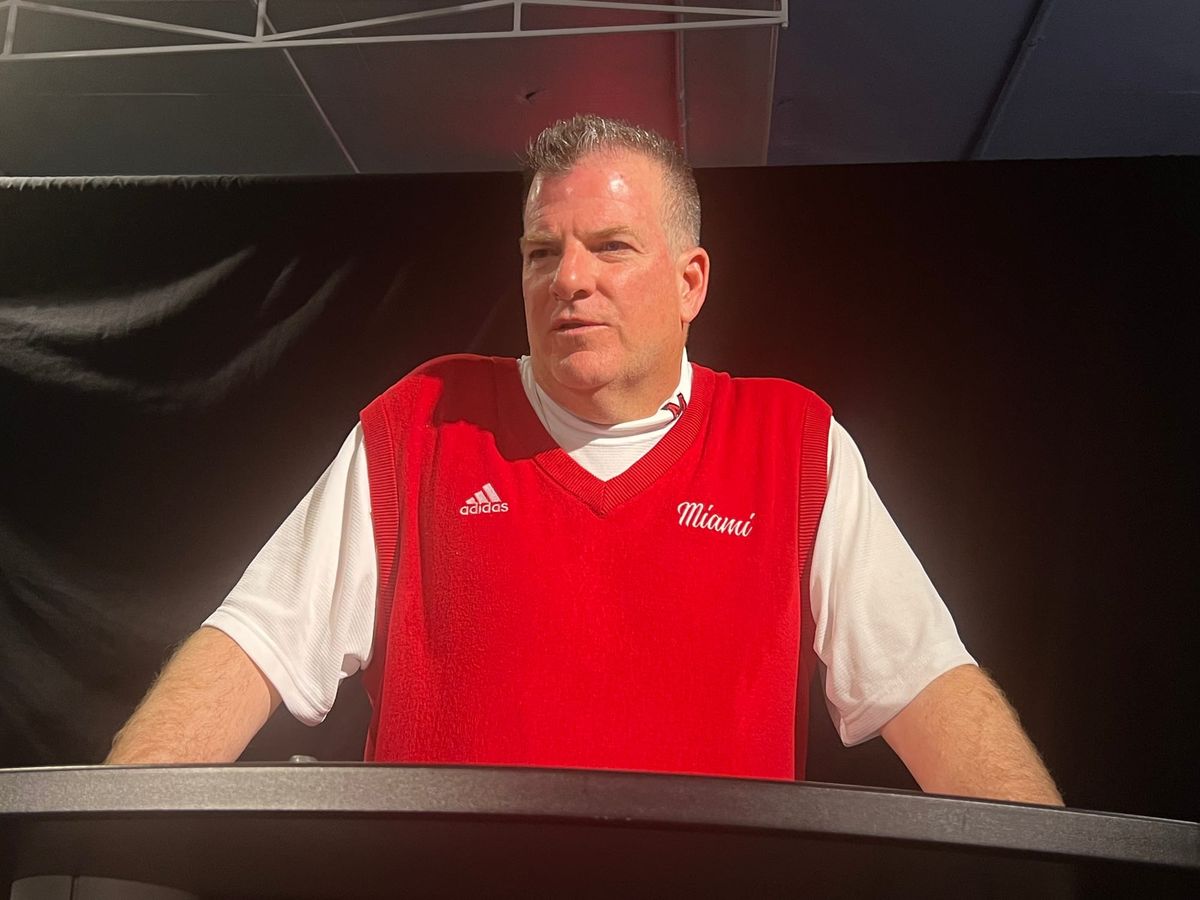
"That's as hard of a loss," Miami head coach Chuck Martin said before pausing. "I'm trying to think. I can't think of a harder loss I've had in a game in 30 years I've coached. What's at stake in the Bell and it's right there for the taking. We tried to take it. We didn't take it though. They took it and they got it, and we've got to live with that forever. We'll never get this one back unfortunately."
Now the oldest non-conference rivalry is officially dormant. The evolving structure of college football has made scheduling non-conference rivalries increasingly difficult. Cincinnati moved to a nine-game conference schedule upon joining the Big 12 in 2023, while Miami will follow suit when the MAC shifts to a nine-game conference slate in 2028. That leaves fewer opportunities for the Victory Bell to make another public appearance.
Both head coaches reflected on the future of the rivalry, admitting it's largely out of their hands.
"I don't really have a whole lot of control over that when we're scheduling games," Satterfield said. "We just play the ones that they tell us to play. It's crazy how long this game's been going on and how college football has changed so much over the years. We're in the Big 12 now and they're still in the MAC conference. So it makes it a little bit more difficult I think when you start scheduling games for the future."
Martin, who coached 11 games against Cincinnati, was very honest about his feelings toward the rivalry. Miami lost 18 of the final 19 in the series, enjoying one overtime triumph in 2023.
"I'd say it pretty much sucked except for the one time we beat them," Martin said. "So for me, it sucked. We haven't beat them very often. We've spent a lot of time on them. I don't know how much time they spend on us. I doubt they spend near as much time on us as we spend on them. I'd venture they don't spend one-thirtieth amount of time as my RedHawks spend on them."
Despite his 1-10 record against the Bearcats, Martin isn't ready to shut the door on a historic college football rivalry. He wants it to continue, albeit with a different arrangement.
"Go play Cincinnati at Nippert," Martin said. "We get paid every year. I've gone to Miami, Florida to get paid. Like why am I flying to Miami when we stayed in Westchester, we drove 20 minutes down here, and it's the oldest non-conference rivalry? To me it makes no sense."
Cincinnati and Miami previously alternated hosting duties for the Victory Bell rivalry on an annual basis, with the occasional neutral-site game at Paycor Stadium or TQL Stadium in Cincinnati.
The Bearcats typically pay at least one opponent to visit Nippert Stadium each season without a return trip to the opponent's venue. Cincinnati paid $1.125 million for Missouri State to visit in 2027 and $1.1 million for Miami's MAC counterpart Eastern Michigan to visit in 2028.
Martin believes both programs could benefit by fitting the Victory Bell into this scheduling model.
"Why would they not want to play us?" Martin said. "It's a rivalry. They're not afraid of us. Take us at home, play at your place, and pay us. Let's go. Be wonderful. Go to Nippert. Nippert's great, been there a bunch and it's great. When that thing gets rocking, it gets loud. I'd like a day game, not a night game, 'cause it's a little more rocking at night. It's all liquored up. So, rather play them at day because the couple times we've played them at day — I'm like, it's not so bad here."
When Cincinnati completed the 21-point comeback Saturday, a sea of black helmets and red jerseys sprinted across the field, ecstatic to celebrate with the Victory Bell. Every player in the jam-packed huddle attempted to get a hand on the trophy, making it ring for all of TQL Stadium to hear.
The emotional weight of the Victory Bell was evident.
If Cincinnati defeats Eastern Michigan or Missouri State, that's just another game. The Victory Bell is different, and Martin believes the history and iconography surrounding the rivalry could ultimately be enough to bring it back.
"I think we're going to play again," Martin said. "No one asks me. I have no say in the schedule. No one ever has. I've been here for 13 years. Play Cincinnati on the road at Nippert every year. Have them pay us like a Big 12 team pays us. We keep the rivalry going. They pay us. They're going to pay somebody. Pay us. We get an unbelievable opportunity that's really important. I can't speak for the Cincinnati fanbase, I assume it's important to them, but I know it's important for our fanbase."
Until that day, the Victory Bell is property of the Cincinnati Bearcats, which cemented the series with an unforgettable comeback in the final meeting. Whether that comeback becomes the true final chapter of a 129-game series remains to be seen.
"We'll see how things work out in the future, and if we play them, it will be another great rivalry game again," Satterfield said. "If we don't ever play them again, then the Victory Bell stays in Cincinnati."