Akron's Sara Bower on Congressional meetings: "I wanted to speak as best as I possibly can"
Bower, a junior goalkeeper, went to Capitol Hill to discuss the Protect College Sports Act on behalf of the MAC's Council of Student-Athletes.
Earlier this month, Congress deliberated on the initial proposal for the Protect College Sports Act, a bill which– if enacted– would radically change the way NCAA conducts, gifting the organization certain anti-trust protections upon meeting certain conditions, while formalizing into law several protections for student-athletes at member institutions.
The bill, which passed committee 19-9 earlier this June, is in the midst of markup sessions ahead of a potential vote.
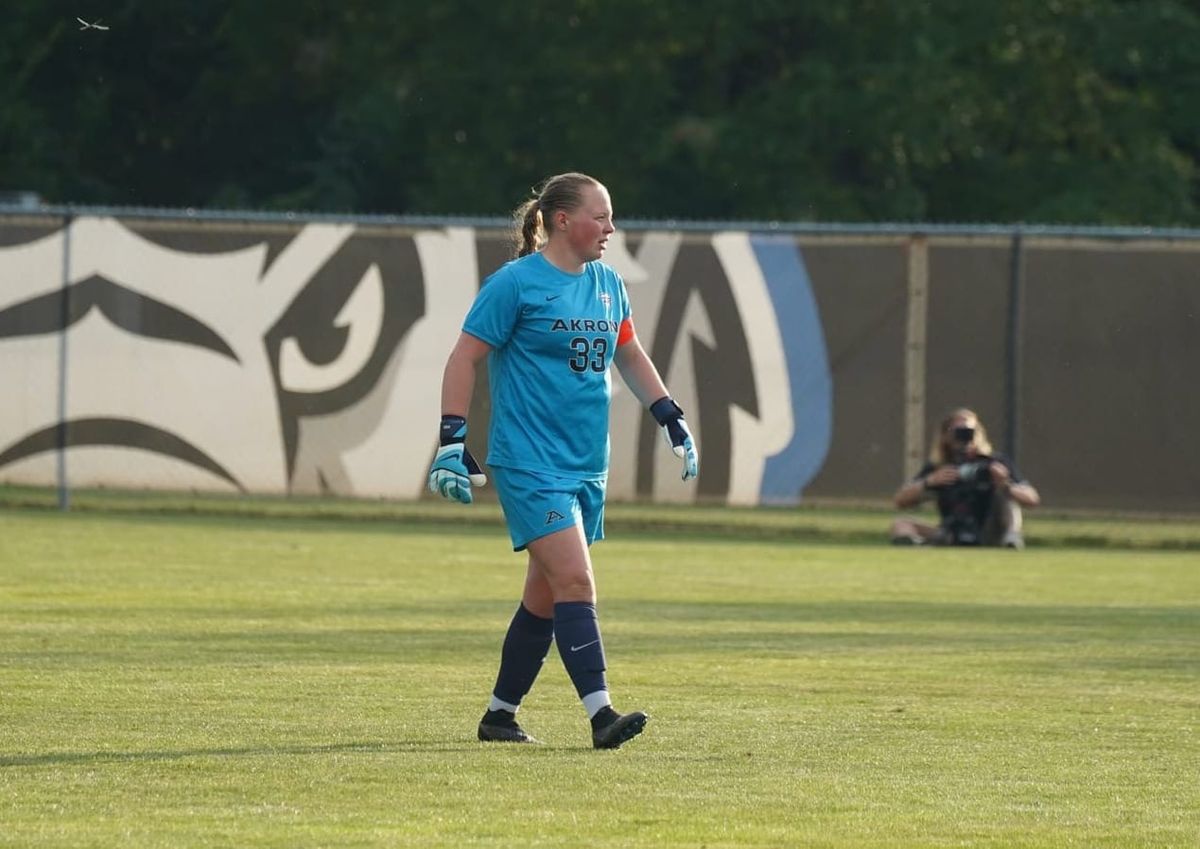
As part of the discussion, several student-athletes have invited to testify to Congress about their experiences. One of those student-athletes was junior goalkeeper Sara Bower, a Cincinnati, Ohio native who has spent her entire career with the Akron Zips.
Bower committed in the fall of her high school senior season after a "tough" process, but her comfort with the campus and facilities clinched the choice which eventually led her to Washington earlier this month.
"When I stepped on campus, I got that feeling... this is exactly where I'm supposed to be," Bower said of her choice to stay in-state and choose Akron. "[M]y team, the people that I first met here, I was like, you know, I really enjoyed the coaching staff, and met the girls on the team, and I enjoyed talking to them, and I just felt like it was a very inviting place for me to be in."
Since her arrival on campus, Bower has embraced the leadership role since stepping on campus, and was recently tabbed as the Akron's student-athlete president.
"I really care about trying to be the best leader I can be," Bower said when asked about the difficulty of being a student-athlete on campus. "The different opportunities you have as a student-athlete to be able to lead and learn and grow in those different organizations... being able to lead early on as a young person. You do get the opportunity to be part of things that are bigger than just your team, or just yourself."
Bower, along with fellow Olympic athlete Gannon Flynn (swimming; Boston University), Memphis football coach Charlie Huff, Syracuse women's basketball coach Felisha Legette-Jack (formerly of Buffalo) and several smaller school administrators, spoke to the Senate committee of Commerce, Science and Transportation about "[the] effects of instability, litigation, and financial pressure on student-athletes, women's and Olympic sports, [historically Black Colleges and Universities], and first-generation college students and schools outside the wealthiest tier."
The visit was Bower's first to the nation's capital, which she admitted was "bigger than I would have ever expected," with the Capitol Building in particular standing out as "ginormous."
"I was very honored that they asked and trust me to do that role," Bower said about her being selected to testify. "... [B]eing able to represent the majority of student-athletes on something that impacts them is really important, it's a unique opportunity; not everyone gets to go to Washington, D.C. and do that."
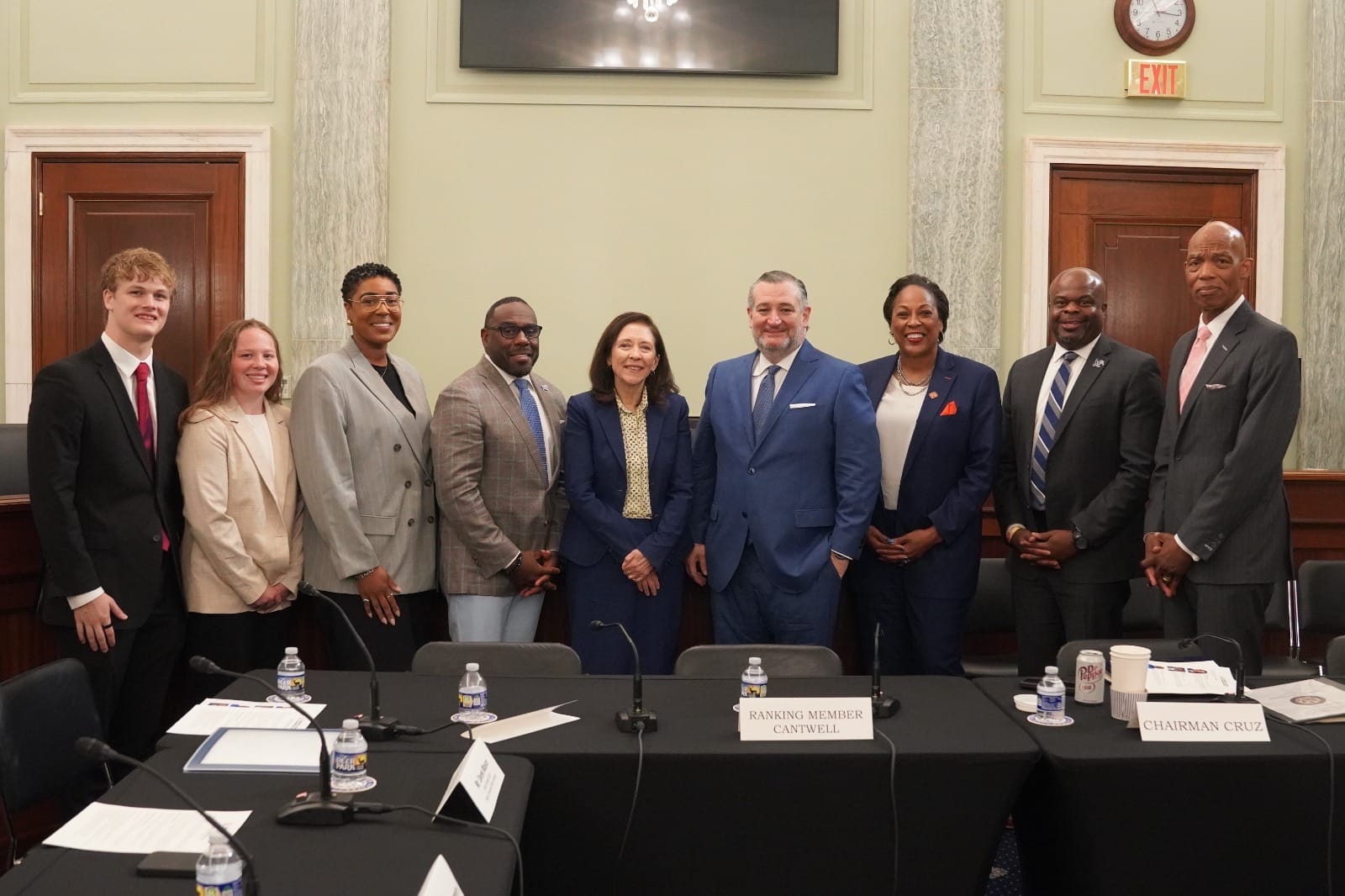
The MAC was notably the only FBS conference to have both their university leadership and conference student-athletes jointly sign an endorsement of the Protect College Sports Act, a move which does not have universal support.
"For me, I think I put more pressure on myself," Bower said when asked about the personal emotions of testifying. "I just wanted to be able to speak well on behalf of all student-athletes. I think that pressure came from myself, and I had a lot of people supporting me, but I wanted to speak as best I possibly can on behalf of all student-athletes."
The United College Athletes Association, a student-athlete advocacy group formed in 2024, recently came out in opposition, citing the PCSA as "an assault on player rights", while the National Urban League and Congressional Black Caucus oppose the bill on inequity grounds. Another group of 19 student-athlete representatives at the FBS level similarly sent a letter to Congress mid-June expressing concern about caps on NIL from "associated entities."
"I just know from what we've talked about with COSA, we're all on board with this bill," Bower said. "We really want this to get passed. We've talked about the different aspects within the bill and what that means and we think for the majority of student-athletes, this is going to be beneficial once this bill passes."
Bower, who was also recently elected the future president of the MAC's Council of Student-Athletes (COSA), said the council has "done a good job doing a lot of work" as advocates on the issue, meeting monthly online as well as an in-person session in May to address various NCAA issues of interest– both away from and together with conference leadership.
Bower said she couldn't speak to the motivations of potential opponents, but that in her perspective, the message was clear: the conference's student-athletes were aligned in the educational value of their own experience.
"Anytime a student-athlete is able to use their voice and be involved in the discussion, I do think it makes an impact," Bower said. "For at least our conference and our conversations we've been talking about was the academic protections... we want to be student-athletes first before athletes, and obviously the athletic part is extremely important, but we truly care about our academics within the MAC and the opportunity that that presents itself."
Bower's emphasis on the academic part of the student-athlete experience was of particular import to the committee; a recent study conducted by the NCAA revealed less than two percent of student-athletes at the NCAA level will go on to be professional athletes at the next level.
"We truly believe that this is the best thing for all student-athletes to help protect the integrity of sport and majority of sports," Bower continued. "So, within the MAC, we fully support [the PCSA], and that's why we've signed on to the bill and other aspects like that."
"We believe that this bill helps protect that, which it clearly does," Bower continued. "So, I think that's one of the biggest things we talked about from [the perspective of the] MAC and being a mid-major. We truly care; we're here to get a degree while playing the sport we love."
The future of the Protect College Sports Act is still up in the air. The bill is currently in its "markdown" phase, which allows members of Congress to suggest changes before putting it back up to a vote on the floor.
With midterm elections coming up soon, there may not be a lot of time to discuss the bill before November, which complicates the passing of an already divisive bill.
All that in mind, Bower is still proud of the efforts being made by the bills' advocates.
"[Testifying was] a little nerve-wracking, but everyone there was super supportive and awesome, and you know we're all kind of trying to be on the same page here and just supporting student-athletes in the NCAA and trying to support this bill," Bower said. "Seeing them and how well-spoken they were, and how supportive they were... I felt very supported as a student-athlete, and they're all great, and talking to me, asking me about my background and stuff like that... Everyone was awesome."
As for Bower herself, it's back to business as usual.
The 2026 women's soccer campaign is set to begin around August, with Bower expected to maintain her role as the team's starting goalkeeper.