Untangling the 2027 MAC TV contract possibilities
With college sports at a crossroads, the MAC now confronts a complicated media landscape.
Landmark legal decisions involving the NCAA, as well as decades-long ripples of conference realignment have made predicting the future of the college sports landscape, especially over the last five years, increasingly harder.
Grant of Rights agreements for several conferences across the country are set to expire in 2027, exerting a lot of pressure in the present as said conferences and prospective television partners come to the table to discuss terms on contract extensions, subpackaging or wholesale movement.
The Mid-American Conference, whose deal is amongst those set to expire in 2027, has typically been aggressive in their television negotiations amongst their "Group of Six" peers.
The MAC's 2014 extension with ESPN, where they went in hard on the potential of streaming services, set the market by securing a 13-year deal worth nearly $800k per member school, embedding ESPN into the conference in the form of improvements to broadcasting equipment. In exchange, the MAC scrapped their own digital network and agreed to have most all their sports featured on what was then called ESPN3, the Worldwide Leader's emergent digital streaming service of the time.
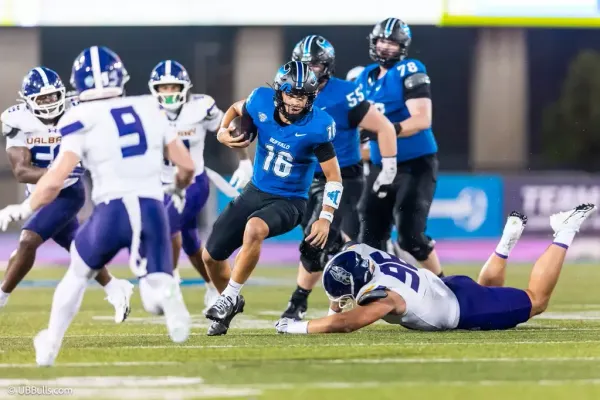
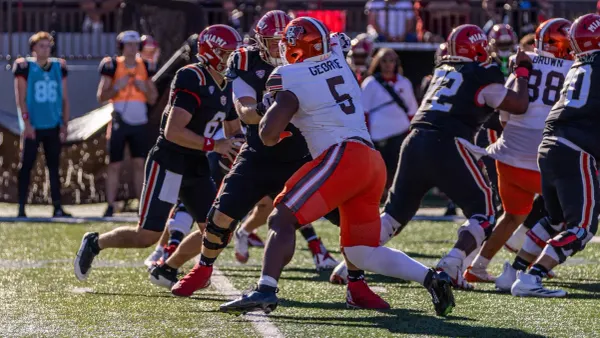
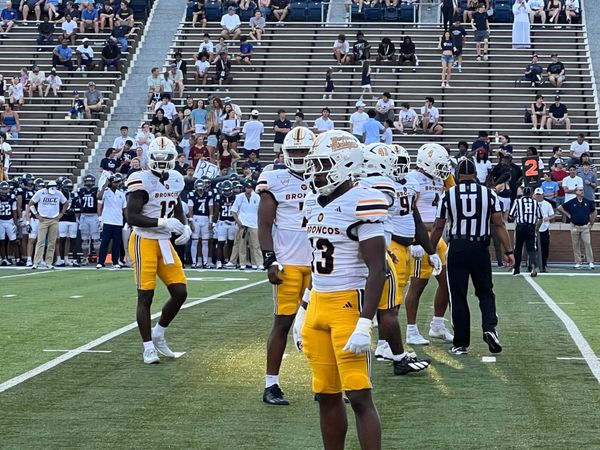
As part of the deal, the MAC also conceded more of the football conference schedule to weeknights, which has upped the conference's exposure to a national audience– at the cost of cratering attendance numbers and hardcore fan engagement.
The last few years of the media market have not been kind to the MAC. ESPN3, which was largely non-paywalled, was absorbed into what was eventually called ESPN+, which required both payment and separate credentials from cable services. Eventually, this was absorbed into ESPN Unlimited, their proprietary direct-to-consumer service launched in 2025, but has had notorious issues with double payment and market confusion, as ESPN Unlimited can be bought on its own and as part of certain cable/satellite/streaming packages.
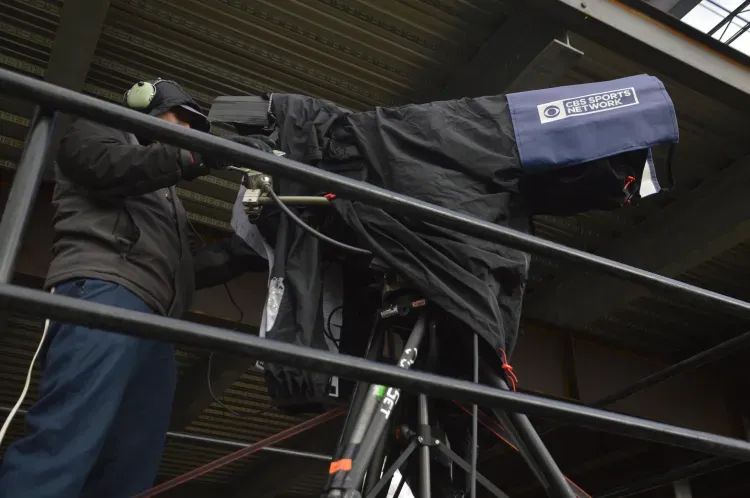
Initial promises of increased exposure on the ESPN family of networks have instead seen more midweek games being locked behind ESPN+ and subleased to CBS Sports Network, a non-Nielsen rated channel which does not have nearly the same reach as ESPN's auxiliary channels, as well.
The quality of broadcasts did indeed go up to start, but have largely plateaued or gotten worse as ESPN has started to spread itself thin. (At points this season, multiple games in the MAC failed to have lines of scrimmage or first-down lines.)
Considering those circumstances, it is easy to see why MAC fans are frustrated with the situation. So what's next then?
Talks of pooling together broadcasting rights amongst the Division I teams at this point, socialized by MAC commissioner Jon Steinbrecher and American Conference commissioner Tim Pernetti in recent months, are best described as "hopelessly optimistic."
To wit, Conference USA and the Sun Belt Conference, seen as the MAC's peers at Division I, opted to re-upped with ESPN to stay under the umbrella at increased rates.
Adding Sacramento State for football, while a shocker even to the most plugged-in of fans, was a move created partly for flexibility in this particular venture. Sacramento was the lone top-20 television market which had gone unrepresented at the FBS level prior to their promotion, helping the league recover from the loss of the Chicago-area market which Northern Illinois carried before their departure to the Mountain West Conference.
With the league set to move forward with 13 members after July, the potential of expansion is something they can sell to prospective partners. (Though, who exactly that would entail is a different conversation altogether.)
Being the last of their peers to negotiate, the league can take their time. There's multiple avenues to take, and the MAC has positioned itself to try and keep their options open.
What options are those, exactly? We try out best to look into the possibilities:
Maintaining the ESPN/CBS relationship
This choice would fall under the "better the devil you know" principle.
Under the current split, ESPN houses all Olympic sports on their streaming services and has first choice on airing MAC football contests, as well as exclusive rights to the MAC Football Championship broadcast. ESPN also gets the rights to the MAC MBB quarterfinals and Championship Game and the MAC WBB quarterfinals and semifinals.
CBS Sports latched onto the deal in 2015 thanks to a sub-leasing agreement with ESPN. Their primary relationship with the MAC is through men's and women's basketball, selecting up to 24 games (12 in each division) for national broadcast, as well as the MAC MBB semifinals and MAC WBB Championship Game. However, it also does gets some selections for MAC football as well through sub-lease.
In all, MAC member schools bring in between $2M-2.5M per year per member school in television earnings. (UMass earned a 75 percent split in 2024-25 and will earn a full share moving forward; Sacramento State will earn no TV money as part of their membership agreement.)
This makes for an interesting comparison to their peer institutions.
Conference USA opted for the MAC approach when going to the table in 2022, agreeing with ESPN to air more weeknight football games and sub-leasing certain content to CBS Sports in exchange for a larger payout. Their five-year deal, set to expire in 2027, grants about $750k-800k per year per member school. They'll be heading into negotiations once again in 2027, and will likely try to recruit some regionally close FCS members to try and boost their leverage in a future deal. (Again, something to be discussed later.)
The Sun Belt Conference re-upped with ESPN in 2022 as well, but it is a markedly different deal in composition. The SBC signed to an eight-year term, taking them out of the ensuing Grant of Rights storm, and all of their sports content is exclusive to ESPN. There are no sub-leases for any sport or tournament. Perhaps as a reward for this loyalty, the SBC's payout averages to about $2 million per year per member school.
This also invites comparison to the American Conference, but they're in a unique spot, as "legacy" members make nearly three times more per year than newer members due to a clause in their ESPN deal which forces a renegotiation of terms if realignment changes the membership in a major way.
Re-upping with ESPN presents security, both in that fans won't have to get to know new methods for watching their favorite teams and that ESPN as a brand is so seminal to the sports world that it should be able to make good on its payments and metrics.
The MAC jumped from $120k per member school to about $800k per member school back in 2014, and the current valuation is now closer to $2M. The Mountain West drew about $5M in their latest negotiations (which we'll get to momentarily), so a market rate could be slightly below that range. However, re-upping with no guaranteed changes to scheduling procedure would likely draw ire in league circles. Two current member schools looked into other conferences a few years back, and NIU is set to leave in July; the whispers aren't for nothing.
Any negotiation will inevitably center on weeknight football games, a topic which has faced increased hostility from member school administrators over the last two years.
Looking at how ESPN handled games hosted by conference members in 2025, the total number of broadcasts wound up being 19– with 14 of those 19 ESPN broadcasts from Nov. 4 to Nov. 29, and zero regular-season broadcasts on ESPN or ABC. (This 14-game November stretch has been fairly consistent since the deal was initially signed, with ESPN emphasizing these weeknight broadcasts as a major part of their emergent portfolio.)
An additional 10 games were sub-let to CBS Sports Network throughout the season, while four weeknight games and the vast majority of the conference season were streaming-exclusive on ESPN+.
(If you were curious, ESPN's four Saturday games were West Virginia/Ohio in Week 3, UNLV/Miami in Week 4, Toledo/Bowling Green in Week 7 and Central Michigan/Western Michigan in Week 10– all on ESPNU.)
The negotiation will likely go one of two ways: either the MAC secures a market-rate term to keep the deal as-is, or they risk taking a cut in both exposure and pay to have more control on how sports are scheduled.
Now, the MAC could take a slightly lower number than market from ESPN as a concession to guarantee all their football games to be on a Saturday.
Though this would be a victory for the in-person and student-athlete experience, this solution has its own issues, namely in national exposure. ESPN recently recruited the SEC away from CBS and had a 10 percent stake of its business bought by the National Football League. ESPN also holds primary stakes in the ACC, Big XII and American Conference as well, leaving little room for the MAC on ESPN's family of cable networks.
Under this hypothetical, fans would likely have to depend on paywalled content even more than today to keep up with their teams, almost neutralizing the idea of an ESPN partnership in the first place.
There's comfort in the known; the question will be if it's worth it.
Moving to a new primary provider

The thought behind this theory is that now, more than ever, there are plenty of options available for watching sports.
If the conference leadership decides ESPN's rigid programming standards and insistence on weeknight inventory is too much, you can take the league's package of sports and shop it to prospective companies– whether that's with traditional broadcasters or with a non-traditional streamer– and potentially pull in more money than the current deal.
If they play their cards right, they could walk up to certain companies and offer something unique: exclusive rights to a whole slate of conference sports.
There are a few traditional and non-traditional ventures to target as 2027 looms.
The CW
The CW has been aggressive in adding sports content lately. Their portfolio includes the full season of NASCAR's O'Reilly Auto Parts Series, PBA Bowling, PBR Bull Riding, WWE NXT, AVP Pro Beach Volleyball, Savanna Bananas broadcasts, select football and basketball contests for the ACC, Mountain West and PAC-12.
The CW's major advantage is its ability to be accessed anywhere in the USA without cable. The CW is a true over-the-air channel, with streaming content which can be accessed via their website or smart TV app. If you have a screen, you have access to the CW. They've also recently signed a deal with ESPN's streaming service to help simulcast sports content, which could ease concerns about a transition.
The pain point would be regional differences; due to the CW's affiliation set-up, there is almost too fine of control over content at points, which means scheduled content isn't always guaranteed to be played. Certain CW stations do not allow for streaming of live sports due to their perception of market conditions, which led to customer confusion; the NASCAR O'Reilly Series ran into this issue several times early in their relationship with the CW, which resulted partly in the ESPN deal.
CBS Sports
The MAC already has a relationship with CBS through their sub-lease agreements with ESPN dating back to 2015, as discussed earlier. Moving the MAC product wholesale could guarantee more broadcasts on CBS, CBS Sports Network and Paramount+. CBS' current collegiate offerings are bits and pieces of the Mountain West Conference, the renewed PAC-12 Conference, select games from the FCS' Northeast Conference (NEC), select home football games for Army and Navy, and all UConn football home games.
A potential merger of CBS and TNT could also expand reach into the TNT Sports Network, which is carried nationally on most standard cable package, with a long list of sports offerings (including the NBA, NHL, AEW, March Madness, select NCAA football games via ESPN sub-lease and the NASCAR Cup Series) aired over TBS, TNT Sports, truTV and Bleacher Report (streaming.) There's certainly great potential if the interest is there.
The drawback here is that Paramount+ and/or Bleacher Report may not be prepared for the dramatic increase in volume acquiring all the MAC sports would require; it is likely in this scenario the schools would be responsible for producing the content themselves, which would limit the MAC in negotiations.
FOX Sports
FOX Sports is familiar with any college sports fan, airing college football and basketball content from the Big Ten, Big XII and Mountain West with big FOX, FS1 and FS2 as primary channels and the new FOX One streaming service.
FOX is still navigating the loss of PAC-12 Conference inventory after the new membership departed for NBC (more on that in a moment), which leaves some potential openings for the conference to try and apply for, should they so desire.
Alas, the issue will ultimately be streaming. FOX One is not designed to be an ESPN-like service; its primary function is as a video-on-demand stop. Getting marquee games will also be a challenge, having to compete with three conferences with better national prestige for air time. It's possible the MAC could get some FS1/FS2 games with favorable scheduling, but it's hard to see the MAC getting more than a dozen football games and a handful of basketball games at best.
NBC Sports/Versant
NBC is a potential wild card here.
The ever-changing company recently resurrected the NBC Sports Network brand as an overflow channel for their Peacock subscription service. NBC owns content from the NFL, NBA, WNBA, MLB, English Premier League soccer, Spanish rights to US National Team soccer and the World Cup (via Telemundo), Notre Dame football, Big Ten primetime football games, Atlantic 10 men's and women's basketball, PAC-12 football and basketball, IMSA sportscar racing, the fall portion of the NASCAR Cup Series, and the Olympics, amongst others.
NBC's parent company also spun off various properties into Versant, which is in charge of cable offerings. USA, originally a landing spot for syndicated content and reality TV shows, has gradually moved into sports content in recent years and would likely figure largely into the plan for the MAC if they pursue it.
However, Comcast's propensity to shuffle the deck chairs does leave a lot to be desired in terms of stability. The likelihood of ending up on "big" NBC is also slim to none due to the company's tie-ins with the Big Ten and Notre Dame in the fall, which neuters the whole idea of exposure. Agreeing to weeknights in this scenario wouldn't help; NBC values its evening news slot and primetime television shows too much to budge for MAC sports.
A deal with NBC would likely look like the new PAC-12 Conference's, which would necessitate producing their own content.
Streaming services (Apple, Amazon Prime, YouTube, etc.)
Streaming-only services also have their pros and cons. Now, the MAC is probably not in a position to take all their content behind the velvet rope, but looking at the landscape is a good step to take.
Streamers have shown they want live content, and they want it now. Amazon Prime, YouTube, Netflix and others have tossed out some simply absurd numbers to acquire sports content over the last few years. The MAC could take advantage of this by offering full control of the conference's inventory– including video-on-demand content and unqiue school offerings– and use a PAC-12 approach by offering incentives for performance. (More on that soon.)
Streamers can also present unique opportunities for a league like the MAC, using it as a testing ground for new technologies, like Amazon did when signing their seven-year deal with the NASCAR Cup Series. When YouTube acquired the rights to several international NFL games last season, they allowed content providers to simulcast the game with fans as a second-screen experience.
Amazon and YouTube already have the infrastructure for a streaming-forward package and are both accessible around the world; it is a tempting proposition to consider if you can navigate the smaller details for Olympic sports and the like.
However, there are also dangers to such an approach.
Major League Baseball, Major League Soccer and Formula 1 all moved off ESPN because of the Worldwide Leader's chaffing in negotiations and went to other services to both have tighter control on inventory and increase payouts.
F1 and MLS took their content behind the Apple TV paywall– with mixed results. MLS got $2.2 billion for a 10-year deal in 2022, while Formula 1 ended up with a five-year, $750 million deal), which were big upgrades over their previous deals.
Apple does not release viewing numbers, but early indications are the numbers are down against their numbers with traditional broadcasters. In fact, MLS' deal will end three years earlier than anticipated after a re-negotiation for more short-term money, while Formula 1 has already started to broadcast select races in the US market on other services a third of the way through its first year.
That's not to say it would be impossible to try this approach; rather, the conference would need to know exactly what they're offering and who they're dealing with on the other end.
Exploring a splintered media deal
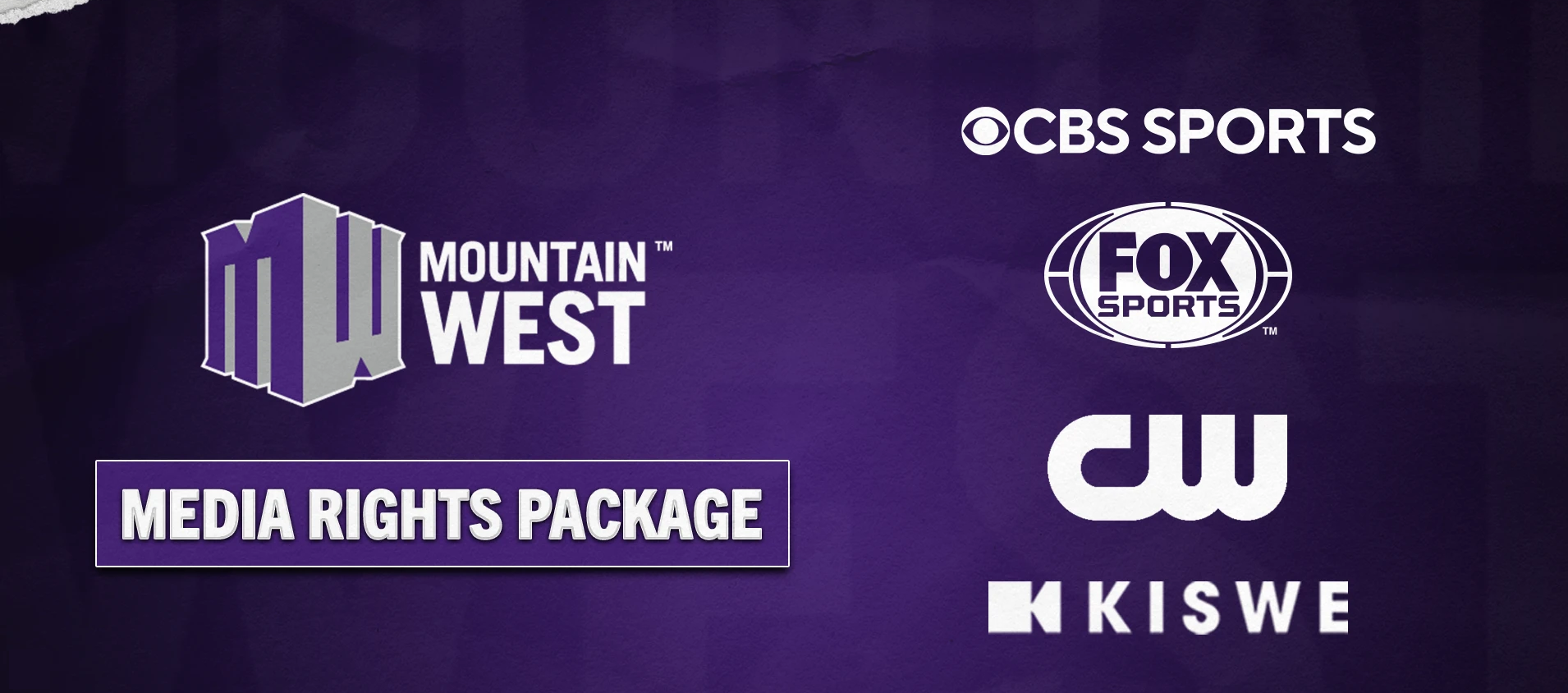
As options for watching sports on TV have ballooned over recent years, many sports leagues have started to divvy up their offerings to various media companies in an attempt to diversify their revenue streams.
The NFL has certainly embraced this philosophy in recent years, adding on Amazon Prime, YouTube and Netflix as primary streaming partners for standalone contests. (More on that in a second.)
In the college ranks, the Mountain West Conference is pioneering a potential new direction for their sports coverage, with games airing on seven different linear channels, including CBS, CBS Sports Network, Paramount+, FOX, FS1, FS2, and The CW Network– as well as two streaming networks in FOX One and the proprietary MWC Network via Kiswe.
The conference's deal with The CW will also see streaming games under the CW license subleased to ESPN's streaming app as part of a separate agreement between Disney and Scripps, expanding its reach even more.
It's a complicated deal, so let's break it down:
- CBS receives:
- 15 football selections (with one guaranteed on CBS/Paramount+) for CBS Sports Network
- 18 men's basketball regular-season games and two women's basketball regular-season games on CBS Sports Network
- Men's basketball title game on CBS/Paramount+, men's quarterfinals and semifinals and women's basketball championship on CBS Sports Network
- FOX receives:
- 12 football selections for FOX, FS1 and FS2 (with championship on FOX in primetime)
- 20 men's basketball regular-season games on FOX, FS1 and FS2
- The CW (Scripps) receives:
- 13 football selections (all OTA)
- 20 men's basketball selections (all OTA)
- 15 women's basketball secetions (all OTA)
- Streaming of all 48 selections on ESPN's streaming service
- MWC App via Kiswe receives:
- "Over 1,000 events" of non-televised games in football, men's/women's basketball and Olympic sports
- On-demand full‑game replays
- Media day broadcasts
- Video podcasts and original programming
- Game highlights, features and other relevant content
- School-by-school control of content not aired by any of the four major providers on their own website
That's a lot to take in at once, isn't it? Let's break it down a little more and see how this translates from a national audience, then.
Through the new deal, the Mountain West gets 30 football games per season on national and regional networks. That averages out to about two games on-air between the three networks per week assuming a 15-week season (Week 0 through Championship Week.) They also get their championship game on primetime on "big" FOX as part of the new deal.
Shifting to men's basketball coverage makes the comparison even more fascinating. The Mountain West has about 58 regular-season games set to broadcast between their three TV partners on national airwaves. The MAC's number? Much, much less. Between CBS Sports Network's nine regular-season games and ESPN's five (as of 2025), that's 14 regular-season men's contests. The rest of the league schedule is ESPN+ exclusive.
The real risk of the Mountain West portfolio– and pursuing this idea as the MAC– will be if their fanbase is willing to embrace a conference-owned digital network instead of the relative safety of a service connected to a known name in the field. Kiswe, who set to partner with the Mountain West on the venture, has opted to incentivize potential viewers by tying subscriptions to the universities directly.
"Subscription revenue is returned to member schools, helping to enhance resources, support services, and competitive opportunities for their student-athletes," the conference's press release states. "By subscribing and choosing their favorite university, fans not only gain access to comprehensive coverage of their favorite teams but also actively contribute to the success and development of Mountain West student-athletes across all campuses."
It's a helluva gamble which will largely depend on if they get the subscription prices and retention rates correct. Such an approach also risks alienating an audience which is already frustrated by the state of the current sports economy, but if it proves to work, it could be a blueprint for other conferences down the line.
Suffice to say there are plenty of options for the MAC to take moving forward, all of which have unique benefits and drawbacks. It may sound like hyperbole right now, but the decision of where to take the league's games in the next deal will likely define Jon Steinbrecher's legacy as commissioner.
For all the good Steinbrecher has done in prior media deals and promoting the league as a balanced student-athelte experience, there have also been questions about the MAC's national perception and long-term health.
The next year-plus will be a delicate process, as the conference is still going through a sea-change thanks to the House vs. NCAA verdict altering the collegiate sports landscape nearly wholesale. Combine that with volatile market conditions, and nothing is certain.
Whether the conference opts to fall back into something safe or take a risk on something new, eyes will be on what they do next, as it will be a signal to other peer institutions on what they feel is possible in the modern market.
It's important to get the decision right, both for the sake of fans and for the sake of the membership.